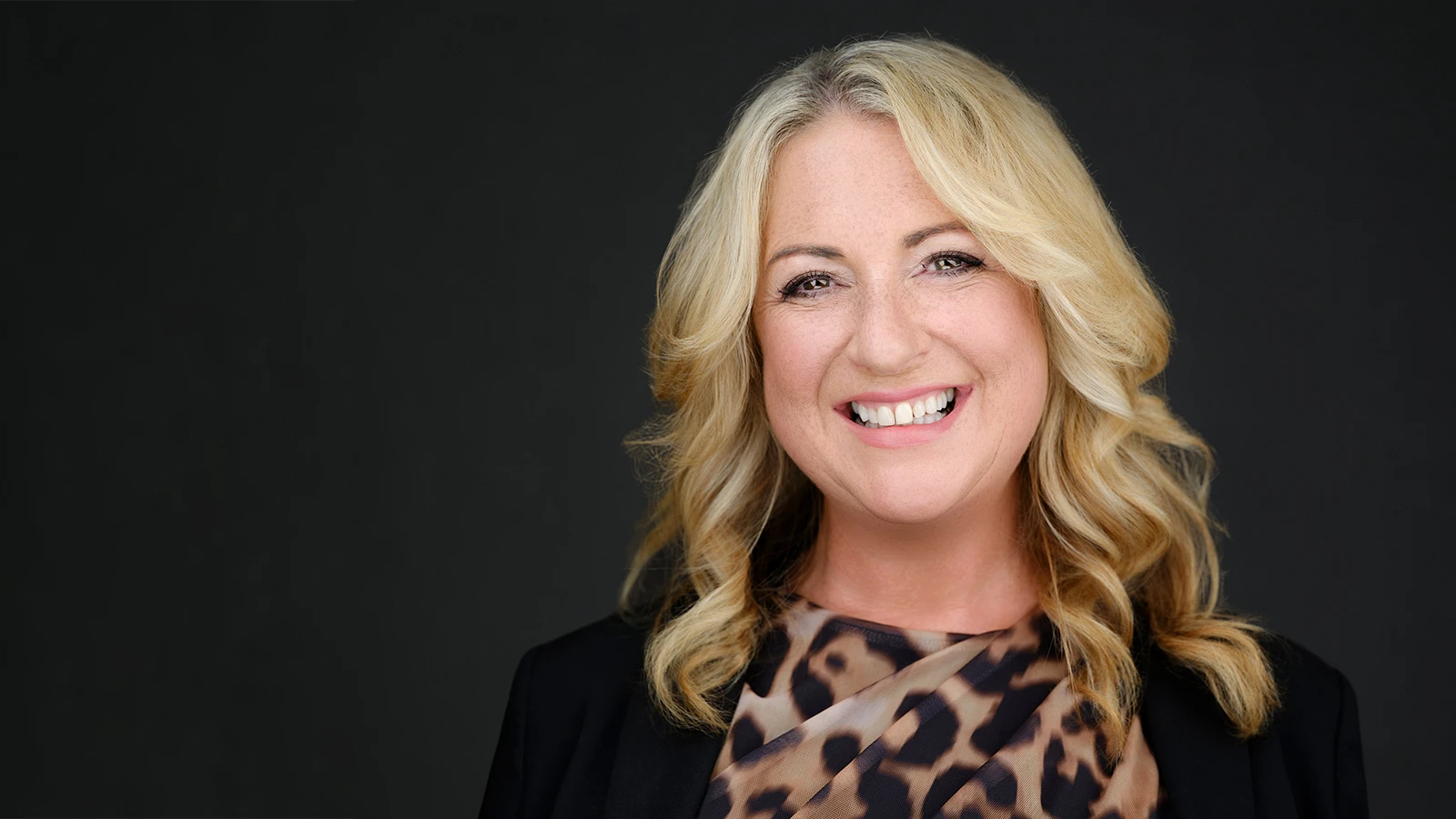
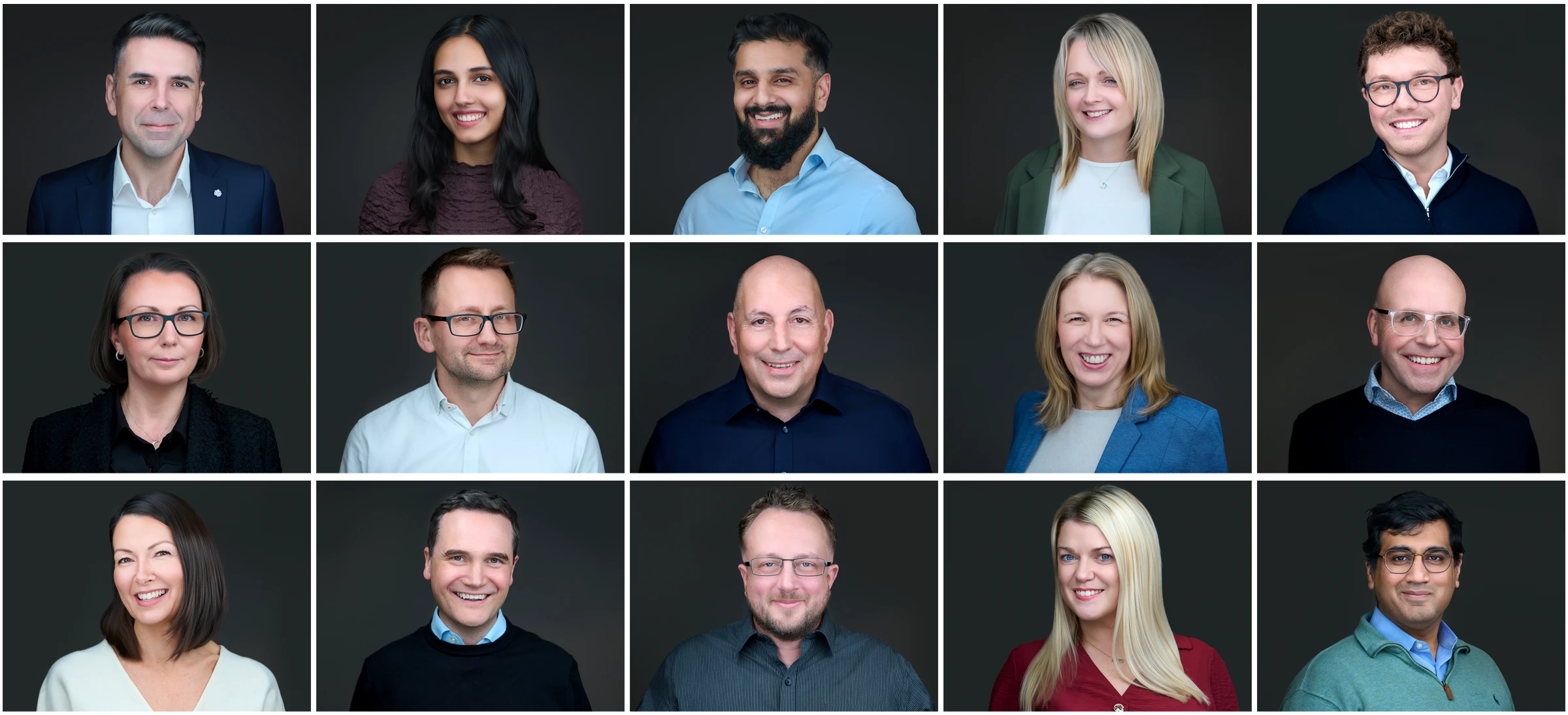
Here's a thing that catches companies out. You get the whole team photographed, everyone looks great, the website goes up, and for a while it's perfect.
Then someone leaves. Someone else joins. Six months on, half the team page matches and half of it doesn't.
It's nobody's fault. Teams move, people come and go. But it does raise a question I get asked a lot: what do we do about the photos when that happens?
When someone leaves, and when someone joins
When someone leaves, headshots are easy. You take them off the team page and nobody notices. The problem is the group shot, you can't just photoshop them out, though there's a way round that, which I'll come to.
The new colleague is the trickier one. They need a headshot, and it needs to look like it was taken on the same day as everyone else's, even though it's two years later. If it doesn't, they stand out for the wrong reason. And that's the last thing you want for someone when they're still finding their feet.
A matching set does two jobs
The first is for your clients. When a team page all matches, everyone shot in the same style and lighting, it reads as one company that has its act together. When it's a patchwork of different photographers and different years, it can say the opposite. People don't consciously clock it, but they feel it.
The second is for the new person themselves. Getting them photographed properly, into the same set as everyone else, is a small way of saying you belong here now. I've had new starters tell me it was the bit that made the job feel real. A nice side effect for what's really just a practical task.
How you actually keep it consistent
Two things make this work.
First, use a photographer who can hold a consistent look and will still be around. The whole idea falls apart if the person who shot your team in 2022 has moved on, or can't remember what they did. I keep the same lighting, background, camera settings and crop for a client, and I write them down, so a headshot I take next year drops straight in next to one from three years ago. You can't tell them apart.
Second, if you use a group team photo, find someone who can composite. That means building the group image from individual headshots, so when one person joins or leaves I swap them in or out without dragging the whole team back in front of the camera. You get an up to date team shot without the diary nightmare of finding a day that suits fifteen people.
Put a date in the diary
The easiest way to stay on top of it is to stop treating it as a one-off and book a regular review. Once a year is plenty. I'd suggest something like every October, but any fixed point works.
When it comes round, you look at who's left, who's joined, and whether anyone's changed enough to want a new one. And people do. Someone's lost a lot of weight, grown or shaved a beard, started seeing themselves differently. A headshot from three years and two stone ago stops feeling like them. A yearly check catches all of it in one short visit, rather than a slow drift you never quite get round to fixing.
Campbell Cain: how it looks when it's done well
Campbell Cain are a pleasure to work with. I've photographed their team since 2020, over four sessions and six years.
What they do well is treat it as an ongoing relationship rather than a one-time job. Every time someone joins, I photograph them to match, and their team stays current. Nobody on their site looks like they were bolted on afterwards, because nobody was. Harry, one of the directors, put it better than I would: "an eminently professional experience with a dose of good humour thrown in. Always gets the best out of you."
Six years on, still matching.
If yours has drifted
Most have, and it's an easy fix.
I bring the studio to you, photograph whoever needs it, and you see and approve every shot before I leave. If there's a set worth matching, I'll match it. If there isn't yet, I'll build one and write it down, so next time is repeatable.
Have a look at how a corporate headshot session works, then tell me your team size and where you are.