Up Close and Personal: Why Speakers Need a Photographer, Not an Audience
You've just delivered a keynote. It went well. The room was engaged, the feedback was warm, and someone from the back row took a photo on their phone.
A week later, you see it. A tiny figure on a distant stage, half-blocked by the head of the person in row three. The slide behind you is more legible than your face. You can't use it for anything.
Every speaker I've worked with has a folder of images like this. Audience shots, event photographer wide-angles, blurry crops from someone's Instagram story. They're proof you were there, but they're not proof you were good.
The photos your audience takes are not for you
An audience member's photo serves one purpose: their LinkedIn post about the event. It's taken from where they're sitting, with whatever phone they have, at whatever moment they thought to reach for it. The framing is wrong, the lighting is whatever the venue provided, and the composition includes the backs of six heads.
An event photographer's wide shot serves one purpose too: the organiser's highlight reel. It shows the room, the branding, the staging. You're in it, but you're not the subject.
Neither of these gives you what you actually need: close-up images that show what you look like when you're in full flow.
What a dedicated photographer captures
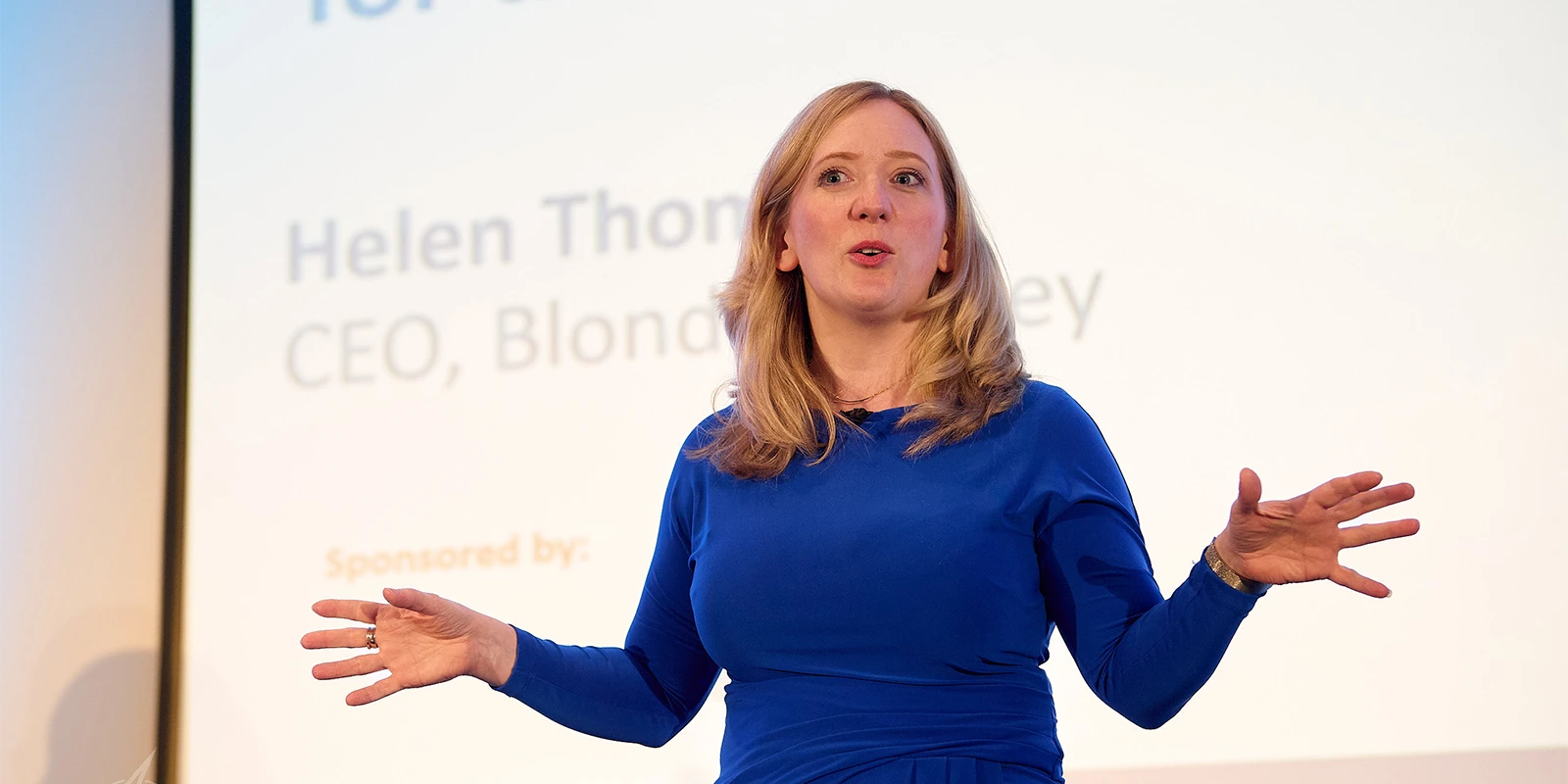
Helen Thomas is the founder and CEO of Blonde Money, a London-based macro consultancy. She's a former hedge fund partner, a CFA Charterholder, and a regular commentator on Bloomberg and Sky News. She speaks at financial conferences across the country.
When I photograph Helen on stage, I'm not documenting the event. I'm capturing her.
The way she opens her hands when she's making a point. The shift in expression when she moves from data to opinion. The moment she pauses and lets the room catch up. The half-smile when she knows she's about to say something the audience isn't expecting.
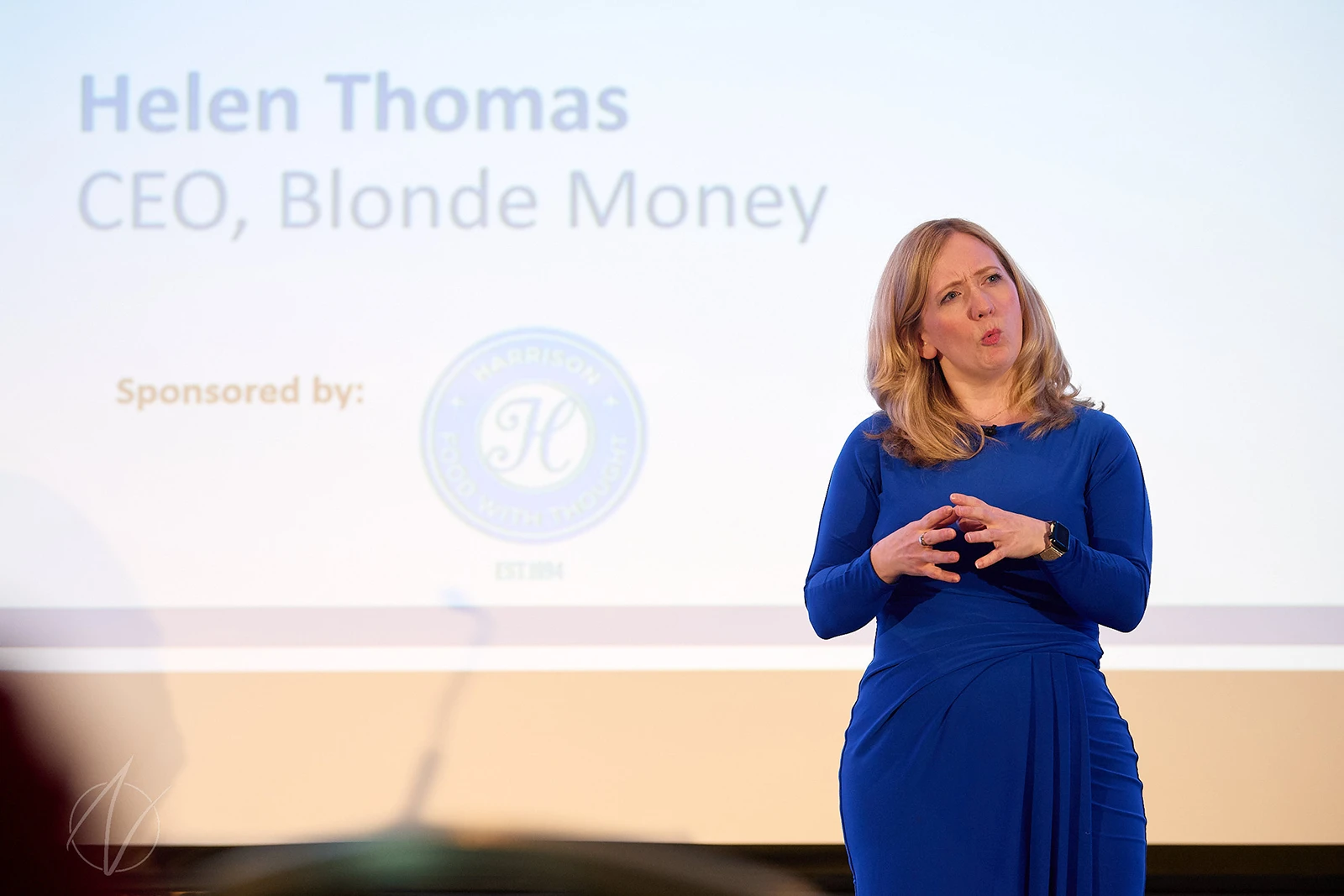
These are the images that make someone look like a speaker worth booking. Not a wide shot of a conference room. Not a posed photo with a microphone. The real, unguarded moments where your expertise is visible on your face.
You can't get these from the back row
A close-up of a speaker mid-sentence, with natural expression and clean framing, requires three things: proximity, timing, and a long lens. You need to be close enough to isolate the speaker from the background. You need to anticipate the gesture, not react to it. And you need the right focal length to compress the frame and make the speaker fill it.
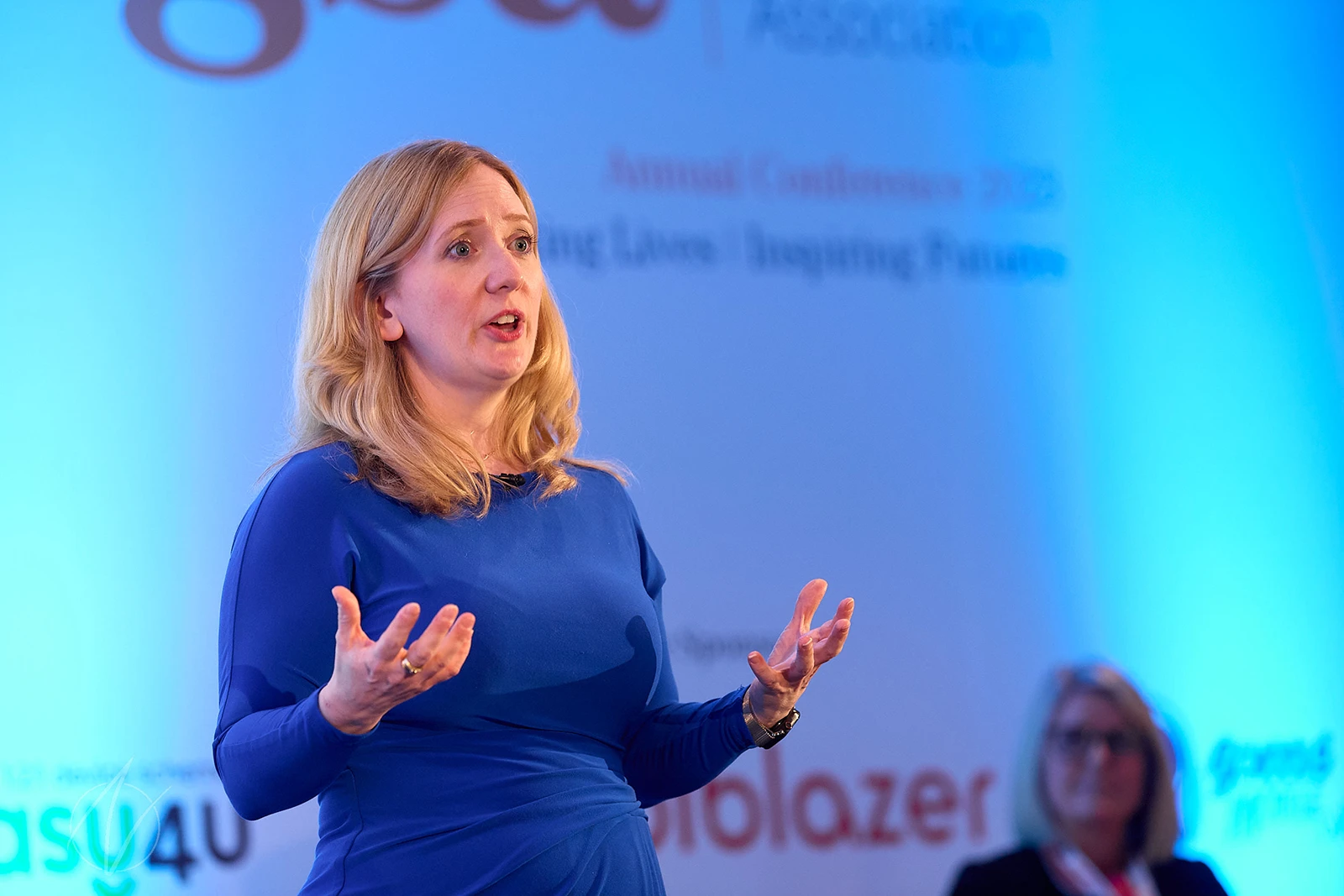
None of that happens from an audience seat. It happens from the front of the room, or the side, with a photographer who knows when to press the shutter. Most of the best speaker images I've taken happen in the half-second before or after the obvious moment. The pause before the punchline. The exhale after a tough point. The glance up from notes that catches real confidence, not performed confidence.
These images work everywhere
Helen uses her speaker images across everything: LinkedIn posts, her website, media kit, speaker profiles, podcast appearances. They're not tied to a single event because they're framed to show her, not the venue.
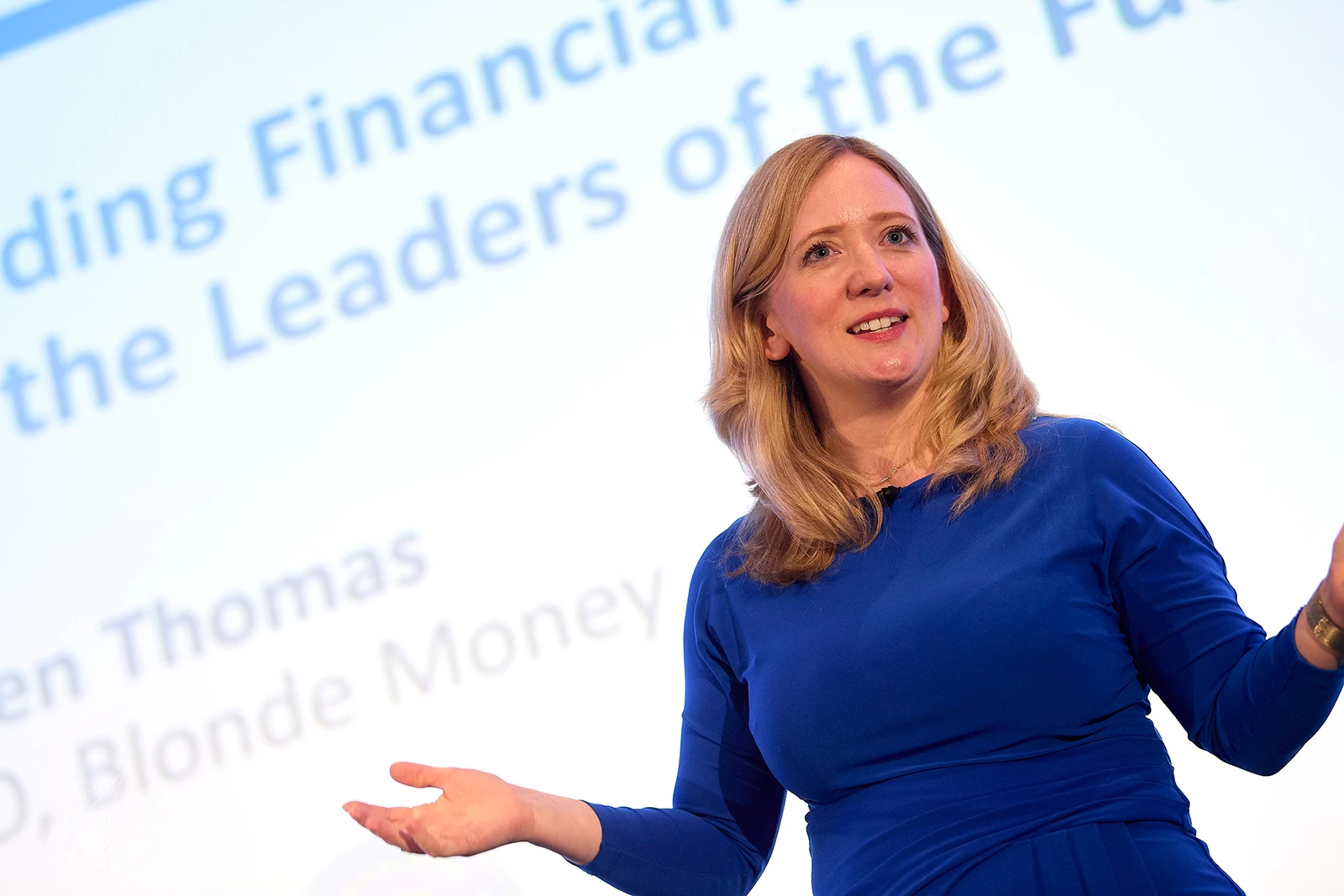
That's the difference. A wide shot with event branding is useful once, for that event. A close-up of you speaking with conviction is useful for years, across every platform, for every pitch.
Think about the speaker profiles you've seen that actually made you want to hear that person talk. The image wasn't taken from row ten. It was taken by someone whose only job was to make the speaker look like themselves at their best.
Will you hate some of them?
Probably. You delete most of your selfies too. That's normal.
When a camera captures a fraction of a second, some of those fractions won't be flattering. Mid-blink, mid-word, mid-thought. I shoot hundreds of frames during a talk specifically so we can find the ones that work. The ones where your expression matches your message. The ones where you look like you.
The images that survive the edit will be worth more than a hundred audience snaps from the back row.
If you speak at events, you need proper images
It doesn't matter whether you're keynoting at a national conference or presenting to thirty people in a hotel meeting room. If speaking is part of how you build your reputation, the images from those moments should be as good as the talk itself.
Relying on audience photos is like spending a month preparing a presentation and then letting someone record it on speakerphone. The content was great. The capture wasn't.
I photograph speakers and professionals across the South West and beyond, bringing the same approach to personal branding photography whether you're on stage or in your office. If you want to see how a strategy meeting shapes the whole session, read about a client whose daily ritual became his most-used images. Or if you're curious about what to do with all the images once you have them, here are 66 ways to put your branding photos to work.