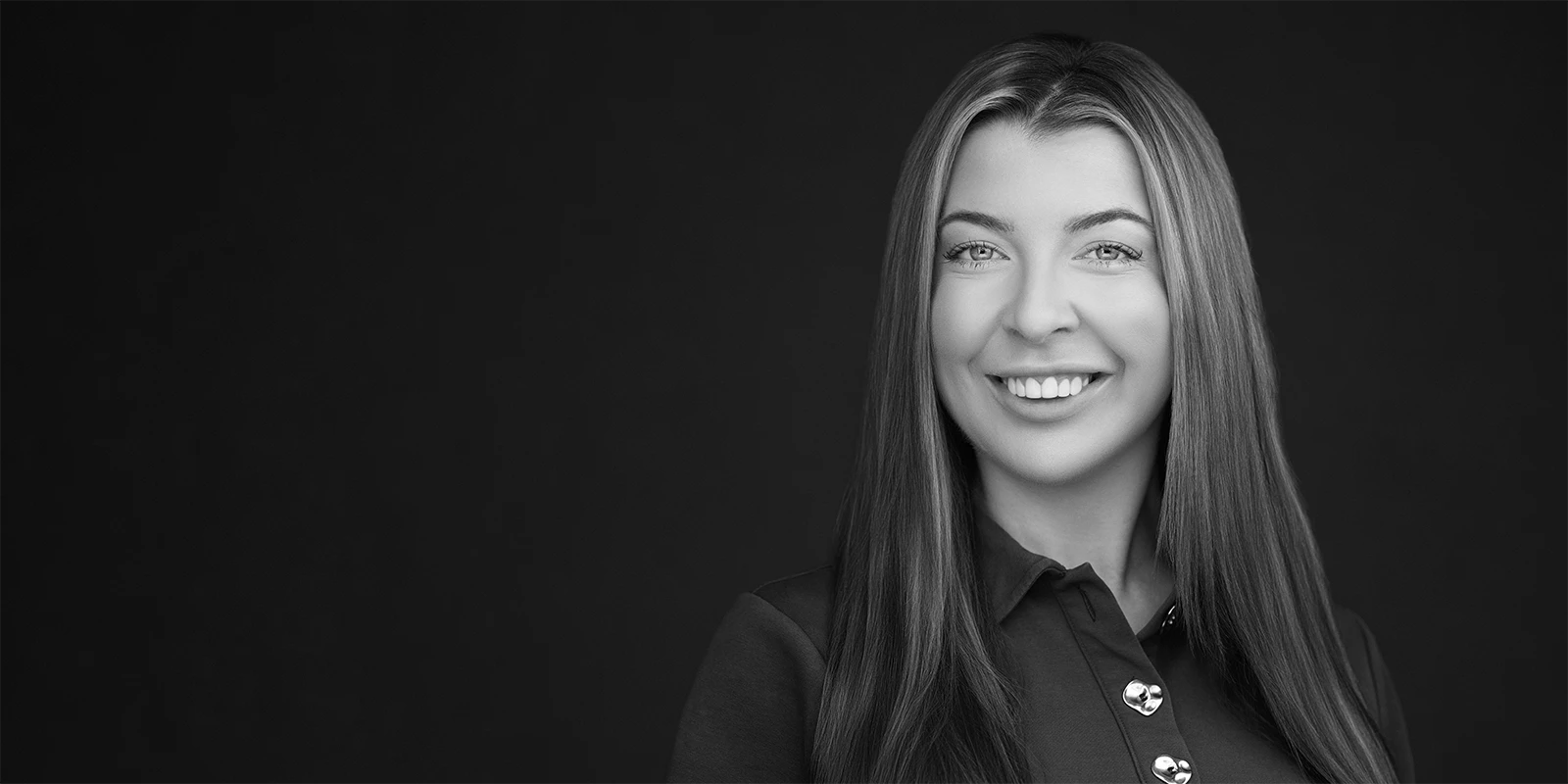
How to Look Natural in a Professional Headshot (Without Practising in the Mirror)
Most people freeze up in front of a camera. Here's why your headshot looks awkward and what a photographer should be doing to fix it during the session.
Your Default Photo Face Is Not Your Best Face
Here is something I see at almost every session. Someone stands in front of the camera, I pick up my lens, and their face immediately changes. Their jaw tightens. Their smile becomes fixed. Their eyes go slightly blank.
It is not nerves, exactly. It is what happens when no one tells you what to do with your face. You default to a kind of photo-ready mask that does not look like you at all.
That is why I coach expressions throughout every session. It is probably the single biggest difference between a headshot that works and one that sits in a folder unused.
What Expression Coaching Actually Is
It is not "say cheese." It is not me shouting "big smile" from behind the camera. It is small, specific, constant direction.
I might say "drop your chin a fraction" or "soften your eyes" or "think about the last thing that made you laugh." I will adjust your shoulders, suggest a slight turn of the head, ask you to take a breath and reset. Sometimes I will say something deliberately daft just to get a natural reaction.
It is a conversation, not a performance. You do not need to hold a pose or remember instructions. I handle all of that. Your job is to stand there and respond to what I say.
Why This Matters for Headshots Specifically
A headshot is a small image on a screen. On LinkedIn, it is roughly the size of a postage stamp. In that tiny space, the difference between "approachable" and "slightly irritated" comes down to millimetres around your eyes and mouth.
That is not something you can control by looking in a mirror and practising. It happens in the moment, in response to direction. When I see the right expression come together, I take the shot. You do not even have to know it happened.
Most of my best images come from the moments between poses, when someone has just laughed or has briefly forgotten the camera is there. Expression coaching creates more of those moments.
What Happens Without It
I have seen the results of sessions where people were left to figure it out on their own. The photographer set up the lights, pointed the camera and said "ready when you are."
The images are technically fine. The lighting is good. The background is clean. But the person looks uncomfortable, because they were.
Nobody taught them what to do with their hands, where to look, how to hold their mouth naturally. So they guessed. And guessing in front of a camera almost always produces tension.
What My Clients Say
The feedback I hear most often is not about how the photos look. It is about how the session felt.
"I did not realise you would be guiding me the whole time." That comes up again and again. People expect to be left standing there, feeling awkward, trying to arrange their face into something acceptable. When they discover that I am directing them through every frame, the relief is immediate.
The other thing I hear is "I actually enjoyed that." Which, if you have ever dreaded having your photo taken, is saying something.
The First Frame vs. the Fiftieth
If I showed you someone's first shot from a session next to one taken twenty minutes later, you would think they were different people.
The first frame has the tension. The stiff shoulders, the fixed smile, the slight wariness behind the eyes. It is the "photo face."
The fiftieth frame has none of that. The shoulders are relaxed. The expression is natural. The eyes are engaged. That is what expression coaching does over the course of a session. It is not one magic instruction. It is a gradual process of getting you to the point where you look like yourself on a good day.
You Do Not Need to Know How to Pose
This is the part that surprises people most. You do not need to prepare. You do not need to watch YouTube videos about your best angle. You do not need to practise smiling in the bathroom mirror.
That is my job. I have done this hundreds of times and I know what works on camera. All you need to do is turn up, listen to a few simple directions, and trust the process.
By the end of the session, you will have a set of images where you look confident, approachable and like yourself. Not a version of yourself that has been styled and posed into someone you do not recognise.
It Is the Thing That Changes Everything
Good lighting matters. A clean background matters. Professional equipment matters. But none of those things fix a tense expression or a forced smile.
Expression coaching is what turns a technically competent headshot into one you actually want to use. It is the reason my clients put their photos on LinkedIn the same day they receive them, rather than leaving them in a downloads folder for six months.
If you have ever looked at a professional photo of yourself and thought "that does not look like me," the missing ingredient was probably direction.
I photograph professionals across the South West, from Bristol to Exeter and beyond, bringing the studio to your office or workspace. If you want to know more about how it all works, here is my preparation guide.