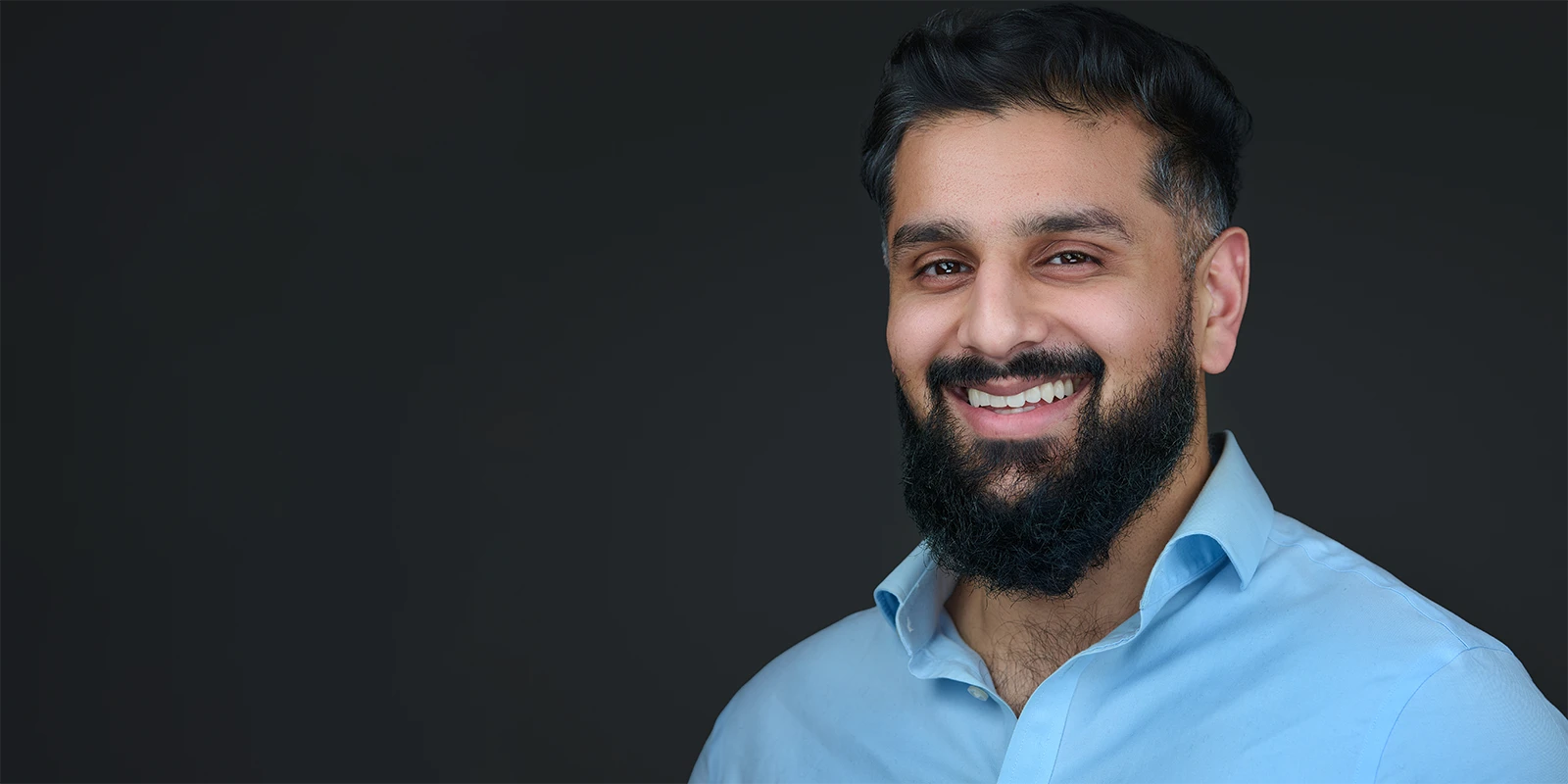
AI Headshots: The Problem Nobody Talks About
Let me say something that might surprise you: AI headshot generators can produce good-looking images. Some of them are impressive. The lighting is clean, the backgrounds are professional, the resolution is sharp.
That's not the problem.
A headshot is not a picture
A headshot is a marketing image. It's the first thing people see when they look you up on LinkedIn, visit your company website, or check you out before a meeting. And in those first few seconds, they're making decisions about you. Do they seem approachable? Confident? Trustworthy?
Your headshot answers those questions before you've said a word. And the person looking at it has no reason to doubt what they're seeing. They assume it's you. That's the default.
So the question isn't whether AI can make a nice photo. It's whether that photo does the job a headshot is supposed to do.
The trust problem
When someone sees your headshot on LinkedIn or your company website, they believe it's you. They have no reason not to. That's how headshots work. They're taken as fact.
An AI headshot exploits that. You're presenting an image as yourself, and the viewer accepts it, because why wouldn't they? But it isn't you. It's a fabrication. Not you on a good day. Not you with good lighting. An artificial image that you're passing off as real.
That's the problem. You're not fooling people who suspect it's fake. You're fooling people who trust it's real. And you're doing it at the exact moment you're trying to build a professional relationship.
The whole point of a headshot is to say: this is who I am, and I'm good at what I do. An AI headshot says something quite different, whether you intend it to or not.
So why do people choose AI headshots?
I don't think most people who use AI headshots are trying to be dishonest. They usually have a reason that feels perfectly sensible at the time. But each of those reasons deserves a closer look.
"It's cheap and I don't want to spend money on a photo." Think about what your profile photo actually does. It appears on every LinkedIn post, every comment, every connection request, every email signature. It's one of the hardest-working pieces of marketing you have. When did it make sense to skimp on the thing people see most often?
"It's quick and easy. I just upload a few photos and it's done." That's true. But when has putting in zero effort ever got you the result you actually wanted? A headshot that works for your career takes more than convenience. It takes someone who knows how to bring out the version of you that connects with people.
"I don't like how I look in photos." This is the one I hear most often, and it's the one that matters most. Almost everyone I photograph has something they're self-conscious about. A nose they've been told is too big. Ears that aren't symmetrical. Teeth they don't want to show. A double chin that appears in every snapshot.
And the thing is, those insecurities have been confirmed over and over. Mobile phone snaps, awkward event photos, maybe a bad experience with a photographer who didn't know how to direct you. Every one of those experiences told you the same thing: this is what you look like, and it's not great.
So when an AI tool offers you a version of yourself that skips all of that, it's tempting. Of course it is. But what you're really doing is giving up on ever seeing what you actually look like when someone who knows what they're doing is behind the camera.
That's where a good headshot photographer changes everything. I know how to angle your face, direct your expression, and use light so you look like yourself on your very best day. Not a fabrication. Not an idealised composite. You, looking genuinely confident and approachable.
I can't tell you how many times someone has walked out of a session standing an inch taller than when they walked in. Or had tears in their eyes looking at the screen because they didn't know they could look like that. That's not something AI can give you. Because it's not just about the image. It's about what it does to how you see yourself.
What a real headshot actually gives you
When I photograph someone, I'm not just pressing a shutter button. I'm coaching their expression. I'm watching for the moment their face relaxes and they look like themselves. I'm adjusting the angle of their chin, the direction of their eyes, the tension in their jaw.
The result is an image that is genuinely, provably you. You on a good day, with good lighting, looking confident and approachable. Not a composite. Not a guess. You.
That's the difference. A real headshot is authentic in the most literal sense of the word. It's a document that says: I showed up, I was photographed, and this is how I look when I'm at my best. There's no asterisk. No small print.
It's not about the pixels
I'm not here to tell you AI images look terrible. Some of them look fine. But image quality was never the point. A headshot is a trust signal. It tells people you take your professional image seriously enough to invest in it, and that you're confident enough to show them who you really are.
An AI headshot skips both of those things. It says you wanted the appearance of professionalism without the substance of it. And for anyone whose career depends on trust, whether that's lawyers, consultants, financial advisers, founders, or anyone in a client-facing role, that's not a risk worth taking.
The question to ask yourself
Next time you're tempted by an AI headshot tool, ask yourself this: would you be comfortable telling a new client that your profile photo isn't real?
If the answer is no, you already know what to do.
If you've been putting off getting a proper headshot because you're nervous about being photographed, that's something I deal with every single session. I'll coach you through every expression and you'll have your finished images within two working days.